

Programme Code
One-Year Full-time / A1M153
Programme Leader
Dr Deng Wenjing (Co-Programme Leader)
Dr Lam Sin-Manw Sophia (Co-Programme Leader)
Enquiry (Admission)
Enquiry (Programme)
Introduction
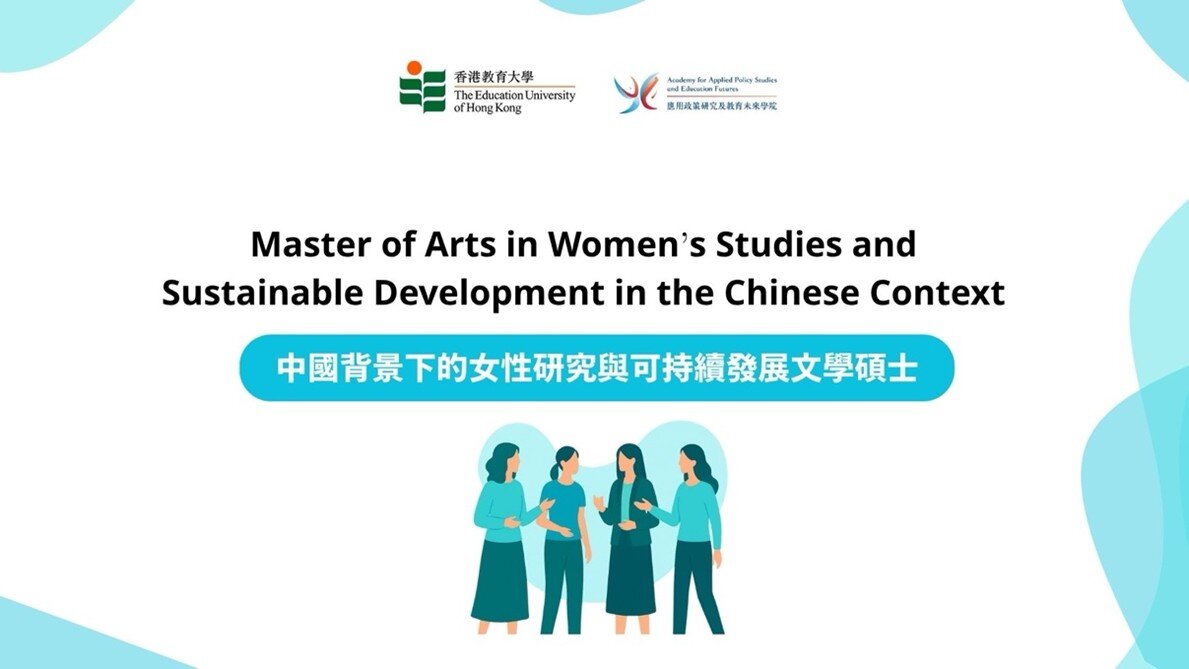
The programme of Master of Arts in Women’s Studies and Sustainable Development in the Chinese Context [MA(WSSD)] adopts an interdisciplinary approach to explore the roles and contributions of women in social change, education, health, language, globalisation, and governance. It emphasises both theoretical inquiry and practical application, equipping students to critically address gender equality and sustainable development challenges in China and the wider Asian region. Students will gain a solid foundation in feminist theory, women’s development, and sustainability, while developing the ability to integrate feminist perspectives with sustainable development practices in diverse contexts.
The programme situates women’s experiences within broader cultural, institutional, and developmental frameworks, with a particular focus on Chinese context. It aligns closely with international policy agendas such as the United Nations Sustainable Development Goals (SDG 4: Quality Education, SDG 5: Gender Equality, SDG 10: Reduced Inequalities), while remaining sensitive to local realities. Through coursework, applied research, and practice-oriented learning, graduates will be prepared to contribute meaningfully to education, policy, and social development initiatives in both local and global settings.
Programme Highlights
- Interdisciplinary and Education-Oriented: Integrates women’s studies, education, sociology, and policy research, highlighting education as a transformative practice for gender equality and sustainable progress.
- China and Asia-Focused: Goes beyond Euro-American frameworks by addressing the cultural, institutional, and developmental realities of China and Asian societies.
- Balance of Theory and Practice: Combines feminist theory and sustainability concepts with applied case studies, policy analysis, and practice-based projects.
- Alignment with Global Agendas: Closely connected to the United Nations Sustainable Development Goals, preparing students to advance inclusive education, gender equality, and social justice.
Disclaimer
The University is committed to upholding the educational quality and standard of the programmes it offers. The University, being funded by the University Grants Committee (UGC), is one of the nine self-accrediting institutions in Hong Kong. In addition, the quality of the educational experience in all programmes offered by the UGC-funded universities is subject to the quality assurance process administered by the Quality Assurance Council of the UGC. Individuals who wish to apply for qualification certification in Chinese Mainland after graduation should contact the CSCSE (website: https://zwfw.cscse.edu.cn/cscse/lxfwzxwsfwdt2020/xlxwrz32/index.html) directly for updated details and confirmation. The certification in Chinese Mainland is an independent process from the conferral of academic qualification in Hong Kong by the University. For the avoidance of doubt, no warranties are given in respect of individual graduate’s qualification certification or recognition in Chinese Mainland or any other professional qualification or license outside Hong Kong.
In the event of inconsistency between information in English and Chinese versions or where an interpretation of the programme content is required, the decision of the University shall be final.
Every effort has been made to ensure the accuracy of the information contained in this website. Changes to any aspects of the programmes may be made from time to time as due to change of circumstances and the University reserves the right to revise any information contained in this website as it deems fit without prior notice. The University accepts no liability for any loss or damage arising from any use or misuse of or reliance on any information contained in this website.
Any aspect of the courses and course offerings (including, without limitation, the contents of the course and the manner in which the course is taught) may be subject to change at any time at the sole discretion of the University if necessary. Without limiting the generality of the University’s discretion to revise the courses and course offerings, it is envisaged that changes may be required due to factors including staffing, enrolment levels, logistical arrangements, curriculum changes, and other factors caused by change of circumstances. Tuition fees, once paid, are non-refundable.
EdUHK, has not collaborated with any agency in Chinese Mainland or Hong Kong on admission, and does not encourage students to entrust their applications to any third-party agents and we always contact applicants directly on updates regarding the applications. You must complete and submit your own application via the EdUHK online admissions system and provide your own personal and contact details. Please refer to the official EdUHK channels, such as programme websites and the admissions system, for the required information to complete your application.
Important Notes for Students from Chinese Mainland on Overseas Credential Evaluation (國(境)外學歷學位認證)
- Students who have fulfilled the programme requirements will be conferred the degree upon the approval of the University's Academic Board. The University bears no responsibility for the evaluation of its degrees outside of Hong Kong. Students are advised to consult with the relevant authority(ies) for the prevailing rules/regulations.
- Individuals who would seek qualification certification in Chinese Mainland after graduation should contact the Chinese Service Centre for Scholarly Exchange (CSCSE) 中國(教育部) 留學服務中心 (https://www.cscse.edu.cn) for updated details.
- The certification in Chinese Mainland is an independent process from the conferral of academic qualification in Hong Kong by the University. For the avoidance of doubt, no warranties are given in respect of individual graduate's qualification certification or recognition in Chinese Mainland or any other professional qualification or license outside Hong Kong.
- CSCSE takes a very prudent approach in evaluating each application, including the students' residential period in Hong Kong during the entire study period. When evaluating graduates' credentials, the full border entry and exit records of individual applicants will be examined.
- Students who would pursue credential recognition should be aware that short stays in Hong Kong during the study period may not fulfil the CSCSE residential requirements, leading to possible uncertainty and risks to their credential recognition.
- Students are seriously advised to consider the above when making personal plans, such as accommodation and travel plans from Hong Kong, etc. and make necessary arrangements where appropriate.
- It is the responsibility of the students to be familiar with and comply with the University regulations and guidelines governing the Taught Postgraduate Programmes. Students should refer to the Graduate School website for the General Academic Regulations and the Code of Practice for Taught Postgraduate Programmes for details.
- Students should consult with CSCSE if they have any enquiries.
1 June 2025
Programme Aims
The aims and objectives of this programme are to equip students with solid knowledge of feminist theory, women’s development, and sustainability. Participants will gain the ability to critically analyse gendered dimensions of social change and to apply feminist perspectives in policy, education, health, and governance for advancing gender equality and sustainable development.
Upon completion, graduates will be able to:
- Understand the conceptual frameworks, theories, and practices of women’s studies and sustainable development.
- Apply feminist and gender-sensitive approaches to issues in education, health, language, communication, and governance.
- Contextualise and re-shape social, cultural, and economic relationships with reference to global frameworks such as the United Nations Sustainable Development Goals (SDG 4, SDG 5, and SDG 10).
- Develop interdisciplinary perspectives on gender-related issues and formulate evidence-based solutions applicable to government, NGOs, education, public affairs, health, and international organisations.
Prospective Students
This programme welcomes applicants from Chinese Mainland, the Hong Kong Special Administrative Region of the People’s Republic of China (HKSAR), and around the world. It is designed to attract university graduates interested in women’s studies, gender equality, and sustainable development, as well as professionals working in education, public policy, social services, healthcare, corporate ESG/DEI units, and international organisations.
The programme is also suitable for mid- to senior-level managers who wish to expand their professional knowledge, strengthen interdisciplinary skills, and become leaders in advancing gender equality and social justice within their fields.
Whether fresh graduates or experienced professionals, students will acquire both theoretical and practical knowledge, broaden their career prospects, and position themselves as key contributors to education, policy, and social development in a global environment that increasingly values gender equality and sustainability.
Programme Structure
The programme comprises 30 credit points(cps), including 6 core courses (18 cps) and 4 elective courses (select 4 out of 6 courses, 12 cps). Each course carries 3 cps.
Core courses | 18 cps |
Elective courses | 12 cps |
Total | 30 cps |
Programme Curriculum
Type | Course Title | Credit Points (cps) |
| Core course | Introduction to Women’s Studies and Feminist Perspective | 3 |
| Core course | Women’s Health and Sustainable Development | 3 |
| Core course | Women, Education and Social Change in Chinese and Asian Contexts | 3 |
| Core course | Women Issues in Chinese and Asian Contexts | 3 |
| Core course | Women, Language and Communication | 3 |
| Core course | Women, Globalisation and Sustainable Development | 3 |
| Elective course | Women, Entrepreneurship and Sustainable Enterprise | 3 |
| Elective course | Gender Policy and Governance | 3 |
| Elective course | Women in STEM | 3 |
| Elective course | Corporate Governance and Sustainability | 3 |
| Elective course | Socio-Cultural and Global Perspectives on Beauty | 3 |
| Elective course | Women's Health Across the Lifespan | 3 |
Course Details
Introduction to Women’s Studies and Feminist Perspective
This foundational course introduces the development of feminist and women’s theories, examining concepts such as gender identity, power relations, and intersectionality. Students will engage with both historical and contemporary debates in women’s studies and critically analyse how gender is represented across law, culture, education, medicine, social policy, and family life. In the Chinese context, the course pays particular attention to how social transformation, urban–rural differences, and policy practices shape gender equality, helping students build interdisciplinary perspectives and understand the complex role of gender in individual lives and social institutions.
This course will be aligned with the UN Sustainable Development Goals, with particular emphasis on SDG 5: Gender Equality. It will also address issues related to SDG 4(Quality Education), SDG 3(Good Health and Well-being), and SDG 10 (Reduced Inequalities), helping students develop an interdisciplinary perspective.
Women's Health and Sustainable Development
This course examines the complex links between women’s health and sustainable development, with a focus on contemporary China. Moving beyond a biomedical lens, health is understood as shaped by social, cultural, economic, and environmental factors. Students will explore how the UN Sustainable Development Goals - especially SDG3 (Good Health and Well-being) and SDG5 (Gender Equality).
Key topics include mental health and well-being, gender-based violence and its implications for women's health, the impact of environmental change on women’s health, and women’s leadership in health policy and innovation. Through interdisciplinary study and case analysis, students will gain critical tools to envision sustainable futures for women in China and beyond.
This course will combine theory and practice through onsite company/organisation visits, scholarly articles, industry reports, seminars, and guest talks. These activities provide students with a multidimensional learning experience, enabling them to deepen their understanding of key issues in women’s health and sustainable development while building interdisciplinary research and critical thinking skills.
Women, Education and Social Change in Chinese and Asian Contexts
This course explores the dynamic and evolving relationship between women, education, and social change, with a primary focus on the Chinese context while incorporating comparative Asian perspectives. It examines the sociological transformations in women’s education and status from the late Qing dynasty (mid-19th century) through the Republican era (1912–1949) and into contemporary times. The course traces how traditional Confucian gender norms and domestic confinement gradually gave way to pioneering missionary schools, late Qing reforms, and Republican-era expansions that linked female education to citizenship cultivation and emerging industrialisation demands. It analyses education as a key force for women’s empowerment and broader social transformation, including shifts in family structures, labour participation, and gender ideologies. Particular attention is given to how education has promoted women’s societal and workforce participation, advanced sustainable development, and addressed social inequalities across historical and contemporary periods.
This course is closely connected to multiple UN Sustainable Development Goals (SDGs), with particular relevance to SDG 4, SDG 5, and SDG 10.
Women Issues in Chinese and Asian Contexts
This course aims to move beyond the traditional theoretical frameworks of gender studies by focusing on women’s issues in the Chinese context. Through the participation of distinguished female leaders and practitioners from diverse fields - including law, economics, public affairs, culture, and social advocacy. The course adopts a unique format of “thematic lectures + interactive workshops”. It explores the distinctive challenges faced by women in China, including leadership practices in the public sphere, the balance between family and personal development, gender roles in social and cultural contexts, legal and policy protections, as well as women’s contributions to innovation and entrepreneurship.
The course maintains close alignment with the UN Sustainable Development Goals, especially in relation to SDG 4 (Quality Education), SDG 8 (Decent Work and Economic Growth), and SDG 16 (Peace Justice and Strong Institution).
Women, Language and Communication
This course investigates the relationship between women, language, and communication. It examines how language reflects and shapes gender identities, power relations, and cultural norms, with attention to media, education, and interpersonal communication.
This course will be aligned with the UN Sustainable Development Goals, with particular emphasis on SDG 5: Gender Equality. It will also address issues related to SDG 4(Quality Education) and SDG 10 (Reduced Inequalities).
Women, Globalisation and Sustainable Development
This course explores the impact of globalisation on women’s lives and sustainable development. It addresses issues such as migration, labour, global governance, and transnational feminist movements, highlighting the “Global Local” nexus. Students will analyse how macro-level global trends impact micro-level realities, understanding the multifaceted challenges faced by women worldwide.
This course is closely connected to the United Nations Sustainable Development Goals, with a particular emphasis on SDG 5: Gender Equality. It also incorporates dimensions of SDG 8, SDG 10, SDG 16, and SDG 17.
Women, Entrepreneurship and Sustainable Enterprise
This course explores women’s empowerment through entrepreneurship and enterprise development within the context of sustainable development and digital transformation. It examines how women contribute to economic innovation, leadership, and social impact in the Chinese and Asian contexts, with particular attention to opportunities emerging in digital economy ecosystems such as e-commerce, platform-based business models, and social innovation.
The course aligns with the United Nations Sustainable Development Goals:
SDG 5: Gender Equality
SDG 8: Decent Work and Economic Growth
SDG 9: Industry, Innovation, and Infrastructure
SDG 10: Reduced Inequalities
SDG 17: Partnerships for the Goals
Gender Policy and Governance
This course focuses on gender policy and governance at the local, national, and international levels. It examines the processes of policy formulation, implementation, and evaluation, and analyses how governance structures shape gender equality and sustainable development. Practical components may be incorporated, such as inviting policymakers from the Chinese Mainland or representatives from UNESCO to serve as guest speakers. The course prepares students for careers in government, non-government organisations, social welfare, healthcare industry and international advocacy.
This course is aligned with the UN Sustainable Development Goals, with a particular emphasis on SDG 5: Gender Equality. It also incorporates dimensions of SDG 10, SDG 16, and SDG 17.
Women in STEM
This course will explore the roles and contributions of women in Science, Technology, Engineering and Mathematics (STEM) across different countries and cultural contexts, as well as the gender barriers they face. We will systematically analyse issues such as bias, social pressure, discrimination, and harassment, and discuss strategies to promote gender equality and innovation in STEM. The course aims to cultivate students’ critical thinking, leadership, and practical skills, fostering both personal growth and social transformation. In addition to examining the challenges women encounter in achieving success in STEM, we will also explore how to inspire and sustain girls’ interest in STEM and how to create fair and inclusive workplaces.
This course aligns with the UN Sustainable Development Goals, particularly SDG 5: Gender Equality and SDG 4: Quality Education, while also contributing to SDG 8: Decent Work and Economic Growth, SDG 9: Industry, Innovation, and Infrastructure, and SDG 10: Reduced Inequalities.
Corporate Governance and Sustainability
As global awareness of businesses’ environmental and social impacts rises, corporations face growing scrutiny over whether their operations and governance align with sustainability goals. This course aims to equip students with insights into how ESG (Environmental, Social, and Governance) principles are transforming corporate strategies. It delves into the definitions and significance of corporate governance (CG), examining the evolving paradigms in light of sustainability imperatives. Key topics to be discussed include the relationship between CG, corporate social responsibility, and sustainability; stakeholder vs. shareholder priorities; the role of local regulations and international standards; and the integration of voluntary and mandatory approaches in regulation.
Socio-Cultural and Global Perspectives on Beauty
This course offers a multidisciplinary exploration of beauty through social, cultural, and global perspectives. Structured around thematic areas, it critically examines how beauty is constructed as a dynamic social phenomenon influenced by historical, cultural, and international forces. Students will investigate how perceptions of the body and aesthetic ideals are shaped across diverse regional contexts, from traditional practices to the pervasive influence of globalised media. By analysing the intersections of beauty with gender, ethnicity, and social status, participants will gain a deeper understanding of how globalisation influences local beauty standards.
Women's Health Across the Lifespan
This course empowers beauty and wellness practitioners to view women’s health through a sophisticated biopsychosocial and public health lens. Moving beyond surface-level aesthetics, the curriculum explores how hormonal milestones - from puberty to post-menopause - dictate external markers in skin, hair, and metabolic vitality. Students will develop the health literacy to identify symptoms of gender-prevalent chronic conditions, analysing their profound impact on a woman’s psychological identity and systemic well-being. A unique focus is placed on the "Psychosocial Load," examining how the stressors of motherhood and career accelerate biological ageing and cortisol-driven physical changes.
By bridging the gap between wellness practice and preventive medicine, practitioners will learn to design evidence-based and age-specific health promotion plans that advocate for essential screenings, positioning wellness leaders as vital community health advocates throughout a woman’s life.
Medium of Instruction
Chinese (mainly Putonghua)
Study Location
Classes in the same or different semester(s) may be scheduled on weekday daytime or evenings, weekends and/or during long holidays at the Tai Po Campus / Tseung Kwan O Study Centre / North Point Study Centre / West Kowloon Study Centre / Kowloon Tong Satellite Study Centre and/or other locations as decided by the University.
Career Prospects
Graduates may pursue the following career fields:
- Government agencies
- Non-governmental organisations (NGOs)
- International organisations
- Public policy and social research
- Education sector
- Media and communication
Disclaimer
The University is committed to upholding the educational quality and standard of the programmes it offers. The University, being funded by the University Grants Committee (UGC), is one of the nine self-accrediting institutions in Hong Kong. In addition, the quality of the educational experience in all programmes offered by the UGC-funded universities is subject to the quality assurance process administered by the Quality Assurance Council of the UGC. Individuals who wish to apply for qualification certification in Chinese Mainland after graduation should contact the CSCSE (website: https://zwfw.cscse.edu.cn/cscse/lxfwzxwsfwdt2020/xlxwrz32/index.html) directly for updated details and confirmation. The certification in Chinese Mainland is an independent process from the conferral of academic qualification in Hong Kong by the University. For the avoidance of doubt, no warranties are given in respect of individual graduate’s qualification certification or recognition in Chinese Mainland or any other professional qualification or license outside Hong Kong.
In the event of inconsistency between information in English and Chinese versions or where an interpretation of the programme content is required, the decision of the University shall be final.
Every effort has been made to ensure the accuracy of the information contained in this website. Changes to any aspects of the programmes may be made from time to time as due to change of circumstances and the University reserves the right to revise any information contained in this website as it deems fit without prior notice. The University accepts no liability for any loss or damage arising from any use or misuse of or reliance on any information contained in this website.
Any aspect of the courses and course offerings (including, without limitation, the contents of the course and the manner in which the course is taught) may be subject to change at any time at the sole discretion of the University if necessary. Without limiting the generality of the University’s discretion to revise the courses and course offerings, it is envisaged that changes may be required due to factors including staffing, enrolment levels, logistical arrangements, curriculum changes, and other factors caused by change of circumstances. Tuition fees, once paid, are non-refundable.
EdUHK, has not collaborated with any agency in Chinese Mainland or Hong Kong on admission, and does not encourage students to entrust their applications to any third-party agents and we always contact applicants directly on updates regarding the applications. You must complete and submit your own application via the EdUHK online admissions system and provide your own personal and contact details. Please refer to the official EdUHK channels, such as programme websites and the admissions system, for the required information to complete your application.
Important Notes for Students from Chinese Mainland on Overseas Credential Evaluation (國(境)外學歷學位認證)
- Students who have fulfilled the programme requirements will be conferred the degree upon the approval of the University's Academic Board. The University bears no responsibility for the evaluation of its degrees outside of Hong Kong. Students are advised to consult with the relevant authority(ies) for the prevailing rules/regulations.
- Individuals who would seek qualification certification in Chinese Mainland after graduation should contact the Chinese Service Centre for Scholarly Exchange (CSCSE) 中國(教育部) 留學服務中心 (https://www.cscse.edu.cn) for updated details.
- The certification in Chinese Mainland is an independent process from the conferral of academic qualification in Hong Kong by the University. For the avoidance of doubt, no warranties are given in respect of individual graduate's qualification certification or recognition in Chinese Mainland or any other professional qualification or license outside Hong Kong.
- CSCSE takes a very prudent approach in evaluating each application, including the students' residential period in Hong Kong during the entire study period. When evaluating graduates' credentials, the full border entry and exit records of individual applicants will be examined.
- Students who would pursue credential recognition should be aware that short stays in Hong Kong during the study period may not fulfil the CSCSE residential requirements, leading to possible uncertainty and risks to their credential recognition.
- Students are seriously advised to consider the above when making personal plans, such as accommodation and travel plans from Hong Kong, etc. and make necessary arrangements where appropriate.
- It is the responsibility of the students to be familiar with and comply with the University regulations and guidelines governing the Taught Postgraduate Programmes. Students should refer to the Graduate School website for the General Academic Regulations and the Code of Practice for Taught Postgraduate Programmes for details.
- Students should consult with CSCSE if they have any enquiries.
1 June 2025
Entrance Requirements (for 2027/28 Admission)
1. General Requirements
- Applicants should normally hold a recognised Bachelor's Degree or other equivalent qualifications.
- Applicants who obtained degrees from universities in Chinese Mainland are required to provide:
- Degree Certificate(學位證書-中文原件掃描)and Online Verification Report of Higher Education Degree Certificate(學位在線驗證報告)issued by the CHSI(學信網)with a validity period of six months;
- Graduation Certificate(畢業證書-中文原件掃描)and Online Verification Report of Higher Education Qualification Certificate(學歷證書電子註冊備案表)issued by the CHSI(學信網)with a validity period of six months; and
- Final Transcript(最終成績單-中文原件掃描).
2. Chinese Language Proficiency Requirements
- Applicants should demonstrate a high level of proficiency in spoken and written Chinese.
3. Interview
- Shortlisted applicants may be invited for an interview.
Tuition Fee
The tuition fee (2027/28 cohort) is HK$196,000 (30cps) for the whole programme, which is provisional and subject to adjustment. Students who still need to take courses to meet graduation requirements beyond the regular study period (one year for full-time) will need to pay a fee for extended study.
The University reserves the right to make changes to the tuition fee without prior notice. Tution fees paid are normally NOT refundable or transferable.
AAPSEF Entrance Scholarship
Starting from the 2026/27 academic year, the Academy for Applied Policy Studies and Education Futures will offer a one-off entrance scholarship (HK$30,000) to local and non-local students with outstanding academic and non-academic achievements in its taught postgraduate programmes.
Places are limited, please visit the Academy’s website for details.
Application and Enquiries
Admission: acadmission@eduhk.hk
Programme: mawssd@eduhk.hk
Interested applicants should submit their applications via EdUHK Online Application Systems. Prior to submission, please visit https://www.eduhk.hk/acadprog/postgrad/index.html for detailed application and admission information.
Disclaimer
The University is committed to upholding the educational quality and standard of the programmes it offers. The University, being funded by the University Grants Committee (UGC), is one of the nine self-accrediting institutions in Hong Kong. In addition, the quality of the educational experience in all programmes offered by the UGC-funded universities is subject to the quality assurance process administered by the Quality Assurance Council of the UGC. Individuals who wish to apply for qualification certification in Chinese Mainland after graduation should contact the CSCSE (website: https://zwfw.cscse.edu.cn/cscse/lxfwzxwsfwdt2020/xlxwrz32/index.html) directly for updated details and confirmation. The certification in Chinese Mainland is an independent process from the conferral of academic qualification in Hong Kong by the University. For the avoidance of doubt, no warranties are given in respect of individual graduate’s qualification certification or recognition in Chinese Mainland or any other professional qualification or license outside Hong Kong.
In the event of inconsistency between information in English and Chinese versions or where an interpretation of the programme content is required, the decision of the University shall be final.
Every effort has been made to ensure the accuracy of the information contained in this website. Changes to any aspects of the programmes may be made from time to time as due to change of circumstances and the University reserves the right to revise any information contained in this website as it deems fit without prior notice. The University accepts no liability for any loss or damage arising from any use or misuse of or reliance on any information contained in this website.
Any aspect of the courses and course offerings (including, without limitation, the contents of the course and the manner in which the course is taught) may be subject to change at any time at the sole discretion of the University if necessary. Without limiting the generality of the University’s discretion to revise the courses and course offerings, it is envisaged that changes may be required due to factors including staffing, enrolment levels, logistical arrangements, curriculum changes, and other factors caused by change of circumstances. Tuition fees, once paid, are non-refundable.
EdUHK, has not collaborated with any agency in Chinese Mainland or Hong Kong on admission, and does not encourage students to entrust their applications to any third-party agents and we always contact applicants directly on updates regarding the applications. You must complete and submit your own application via the EdUHK online admissions system and provide your own personal and contact details. Please refer to the official EdUHK channels, such as programme websites and the admissions system, for the required information to complete your application.
Important Notes for Students from Chinese Mainland on Overseas Credential Evaluation (國(境)外學歷學位認證)
- Students who have fulfilled the programme requirements will be conferred the degree upon the approval of the University's Academic Board. The University bears no responsibility for the evaluation of its degrees outside of Hong Kong. Students are advised to consult with the relevant authority(ies) for the prevailing rules/regulations.
- Individuals who would seek qualification certification in Chinese Mainland after graduation should contact the Chinese Service Centre for Scholarly Exchange (CSCSE) 中國(教育部) 留學服務中心 (https://www.cscse.edu.cn) for updated details.
- The certification in Chinese Mainland is an independent process from the conferral of academic qualification in Hong Kong by the University. For the avoidance of doubt, no warranties are given in respect of individual graduate's qualification certification or recognition in Chinese Mainland or any other professional qualification or license outside Hong Kong.
- CSCSE takes a very prudent approach in evaluating each application, including the students' residential period in Hong Kong during the entire study period. When evaluating graduates' credentials, the full border entry and exit records of individual applicants will be examined.
- Students who would pursue credential recognition should be aware that short stays in Hong Kong during the study period may not fulfil the CSCSE residential requirements, leading to possible uncertainty and risks to their credential recognition.
- Students are seriously advised to consider the above when making personal plans, such as accommodation and travel plans from Hong Kong, etc. and make necessary arrangements where appropriate.
- It is the responsibility of the students to be familiar with and comply with the University regulations and guidelines governing the Taught Postgraduate Programmes. Students should refer to the Graduate School website for the General Academic Regulations and the Code of Practice for Taught Postgraduate Programmes for details.
- Students should consult with CSCSE if they have any enquiries.
1 June 2025